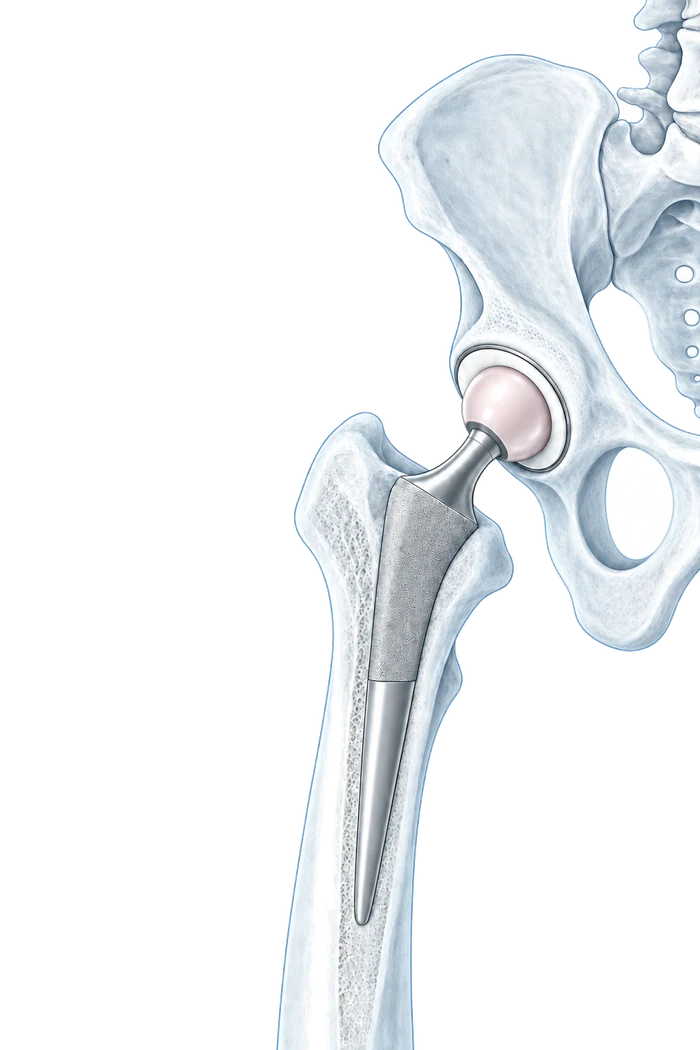
An explanation of the STAR approach to hip replacement surgery for patients and other healthcare providers
Andrew B. Harris, MD · Last reviewed September 2026
The STAR approach is a modern, muscle-sparing technique of reaching the hip joint from behind. STAR stands for Superior Transverse Anatomic Reconstruction. It is a posterior-based approach, meaning the hip is reached from the back, and it is a recent evolution of the traditional posterior approach that has been used successfully for decades.
The difference is what happens to the muscles and tendons during the surgical dissection to reach the hip joint. Traditional posterior techniques generally divided certain key structures at the back of the hip and repaired them at the end. The STAR approach is designed to minimally disrupt several of these important structures.1,2
Dr. Harris trained in the STAR approach at the Hospital for Special Surgery. It is one of the approaches he uses for hip replacement in Chicago, along with the direct anterior approach.
The STAR approach uses an incision at the back of the hip. Rather than dividing the piriformis and quadratus femoris to reach the joint, the approach works around them, and the iliotibial band is only disrupted minimally.1,2 The posterior capsule and the conjoint tendon are repaired at the end of the operation.2
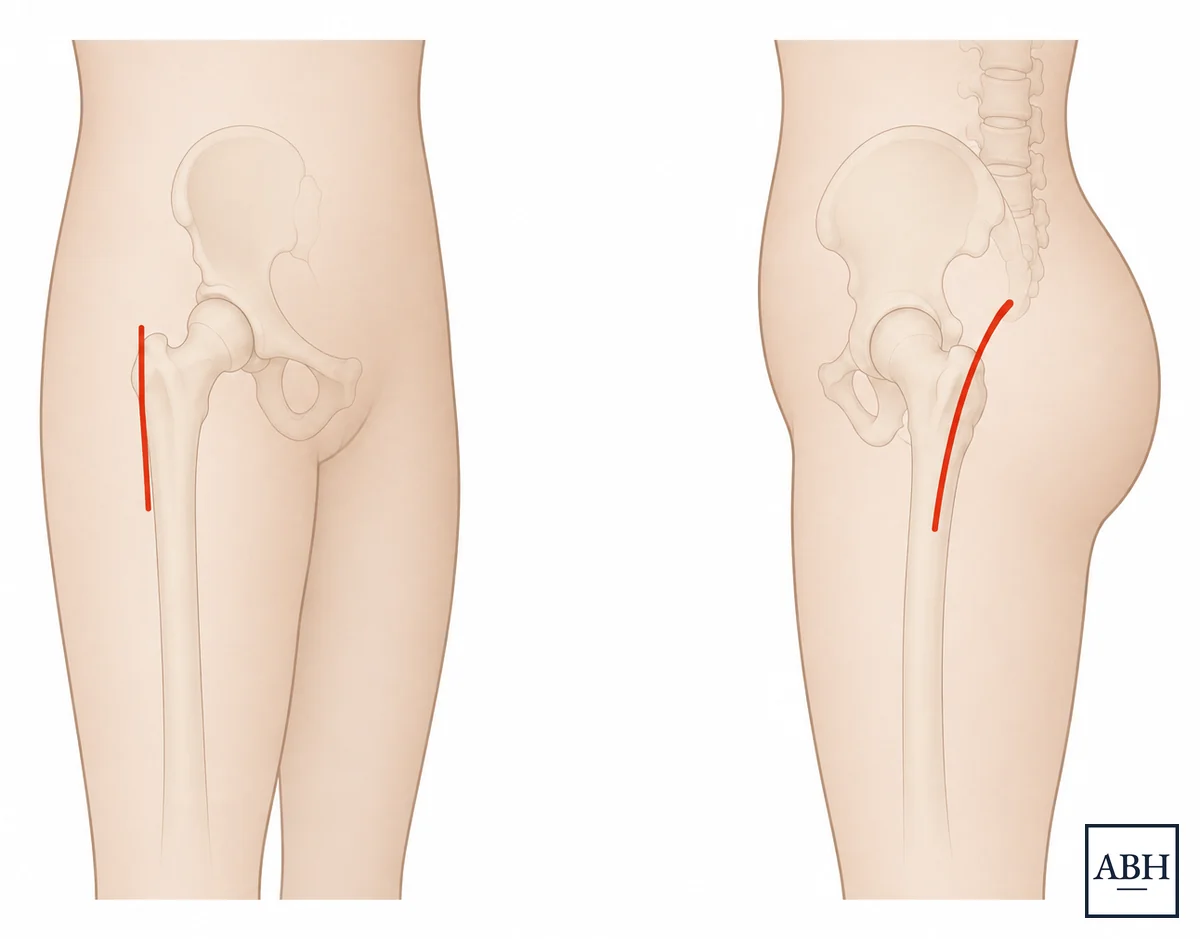
Whichever path is taken, the worn ball and socket are removed and the same kind of implants are placed. The bone work, the implants, and the healing after surgery are not thought to be substantially different because of the approach.
The structures preserved or minimally disrupted during the STAR approach help hold the new joint in place while scar tissue forms, and are thought to help with stability.
Repairing the posterior capsule is associated with lower dislocation rates.3 Most of this evidence comes from observational studies rather than randomized trials, and the authors of the pooled analysis say so themselves, but the direction is consistent across several studies.3
Dislocation is generally uncommon after a STAR hip replacement. In one surgeon’s prospective series of 522 hips followed for a mean of about two years, only one hip dislocated, and it was managed without further surgery. There were no sciatic nerve palsies, vascular injuries or fractures around the implant in that series.1
Patients who have read about posterior hip replacement often expect a list of restrictions afterward. Whether precautions are used is generally decided case by case rather than by one rule for everyone. What was found during the operation, the quality of the tissue, and the individual hip all factor in. Your surgeon should tell you what applies to you before you go home. Dr. Harris decides this hip by hip.
Many patients who have a STAR hip replacement are able to go home the same day when they are a good candidate for it. Whether that makes sense generally depends on overall health, what other medical conditions are present, and what support is available at home. It is planned in advance rather than decided on the day of surgery, and staying overnight is a perfectly reasonable outcome when it is the safer choice.
In one prospective STAR series, about nine in ten patients had gone home by the second day after surgery.1 In a matched comparison against a traditional posterior approach by the same surgeons, average length of stay was under a day.2
Dr. Harris uses both the STAR approach and the direct anterior approach. Neither is applied to every patient by default. A few things in particular may indicate that a patient would be a better fit for this posterior-based approach as opposed to an anterior approach.
Prior surgery or hardware at the back of the hip. Previous incisions, plates or screws from an old fracture, or earlier surgery around the hip change what can be reached safely and what has to be worked around. A history of prior surgery is one of the most common reasons that a specific approach is used rather than another for hip replacement surgery.
Body habitus. Body shape affects how easily each interval can be worked through, and it can make one path more reliable than another, although this is often also surgeon preference.
Femoral deformity, or a case needing more access to the femur. Some hips need more exposure of the thigh bone than others, and this is sometimes easier with a posterior-based approach.
Dysplasia or complex socket anatomy. A shallow or unusually shaped hip socket is sometimes (but not always) more straightforward to address from behind.
Other details of anatomy and imaging are reviewed as well. Your surgeon should be able to explain the reasoning for whichever approach is being considered.
Dr. Harris routinely plans the operation from the patient’s own imaging and uses robotic assistance or computer navigation to help position the implants. That applies to the STAR approach the same way it applies to the anterior approach. In posterior-approach hip replacement, robotic assistance has been associated with a lower risk of revision for dislocation than manual technique.4 This is a finding about how the socket is positioned rather than a reason to choose one approach over another.
Patients may read a great deal online suggesting one approach is decisively better than the others. The differences between modern approaches are generally smaller than the discussion around them suggests, and the differences between approaches tend to become extremely narrow as time goes on after surgery.
One comparison study from the STAR literature shows this. Compared with earlier patients of the same surgeons at one hospital who had a traditional posterior approach, the STAR group did better on the early measures: shorter operating time, less blood loss, a shorter stay, and less opioid medication both in hospital and at six weeks. Improvement in hip function scores was the same in both groups.2
Dr. Harris discusses the reasoning for a specific hip rather than promoting one technique. There is a fuller discussion of how much the approach matters on the anterior hip replacement page.
STAR stands for Superior Transverse Anatomic Reconstruction. It is a modern posterior-based hip replacement, meaning the hip is reached from the back. It is designed to preserve the piriformis and quadratus femoris, to disrupt the iliotibial band only minimally, and to repair the posterior capsule and conjoint tendon at the end of the operation.
Neither is better in general. They are different paths to the same operation, and the same kind of implants are placed either way. The differences between modern approaches tend to become extremely narrow as time goes on after surgery. What matters more is whether the approach suits a particular patient’s anatomy and history. Dr. Harris uses both and explains the reasoning in each case.
The posterior approach to the hip has been used successfully for decades. STAR is a recent refinement of it, with published patient series dating from about 2019 onward.
It depends on the individual hip and on the surgeon. Your surgeon should tell you what applies to you before you go home. Dr. Harris decides this case by case rather than applying one rule to everyone.
It is generally uncommon. In one surgeon’s prospective series of 522 hips followed for about two years, only one hip dislocated, and it was managed without further surgery. Repairing the posterior capsule, which the STAR approach does, is associated with lower dislocation rates.
Often, yes. Many patients go home the same day when they are a good candidate. It depends on overall health, other medical conditions, and support at home, and it is planned in advance.
Prior surgery or hardware at the back of the hip, body habitus, femoral deformity or a case needing more access to the femur, and dysplasia or complex socket anatomy can all point toward a posterior-based approach. A history of prior surgery is one of the most common reasons that a specific approach is used rather than another for hip replacement surgery.
No. The approach describes the path taken to reach the joint. The bone work, the implants, and the healing after surgery are not thought to be substantially different because of the approach.
Yes. Dr. Harris routinely uses robotic assistance or computer navigation to help position the implants, with the operation planned from the patient’s own imaging.
Recovery follows the same course described in the hip replacement recovery guide. Most patients are up and walking with assistance the day of surgery, and most of the improvement happens over the first two to three months, with gains continuing past that.
General information for patients and clinicians, not a substitute for advice from your own surgeon.
The right approach depends on your anatomy, your imaging, and your history. Dr. Harris reviews each case individually and explains the options and the reasoning behind them. Send a message.