Andrew B. Harris, MD · Last reviewed September 2026
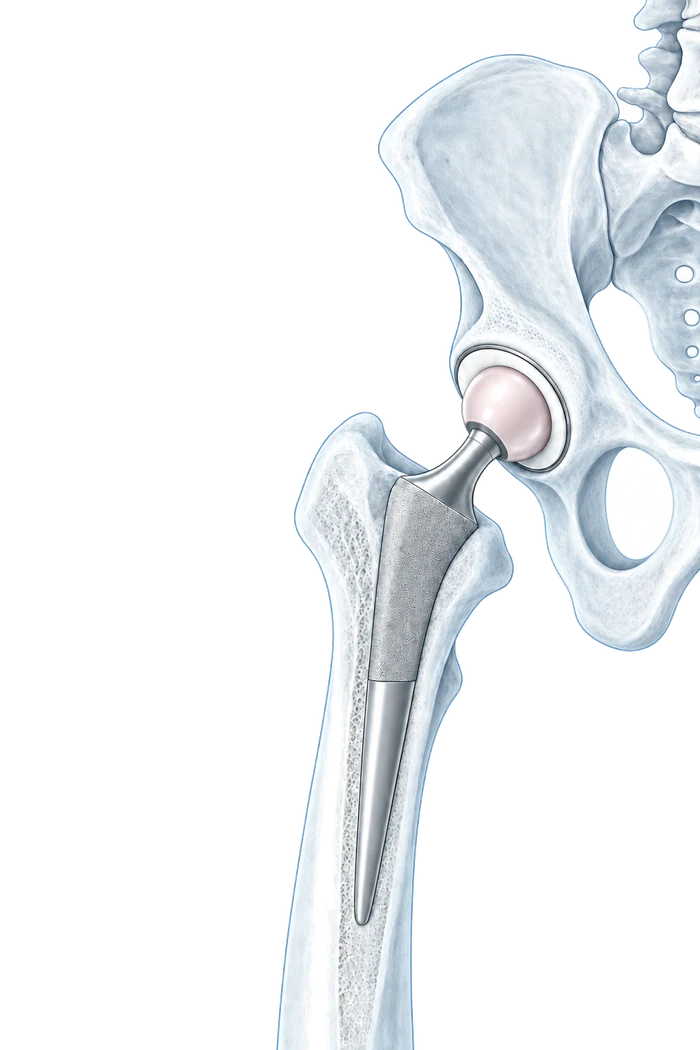
Hip replacement is a focus of Dr. Harris's practice. Hip replacement surgery removes the worn ball and socket of a damaged hip and replaces them with implants sized and positioned to recreate the patient's individual anatomy. It is one of the more reliable operations in orthopaedic surgery, and modern hip replacements can last for 30+ years.1,2
For arthritis, a hip replacement is usually an elective operation, and the timing is largely your choice. Some problems, such as certain fractures, collapse of the bone, or infection, are treated sooner; your surgeon will tell you if one applies. The right time is when the hip limits the patient's life, non-surgical care is no longer enough, and the patient decides they are ready.
Dr. Harris performs the direct anterior approach and the STAR approach, often with robotic assistance.
Osteoarthritis is the most common reason for a hip replacement, but not the only reason. A hip may also need replacing because of avascular necrosis, meaning loss of blood supply to the ball of the hip, inflammatory arthritis such as rheumatoid or psoriatic disease, hip dysplasia, or damage that shows up years after an injury or fracture.
Age alone is not a single criterion for eligibility for hip replacement surgery. Neither is the appearance of the X-ray by itself. Surgery is generally not recommended on the basis of imaging alone; the symptoms and the examination need to match.
Most patients work through non-surgical treatment before surgery is seriously discussed. If a patient is still deciding, the guide to signs you may need a hip replacement covers the main deciding factors.
Dr. Harris sees patients in Skokie, across the North Shore, and in the city of Chicago.
Most patients start with a visit, an examination, and standing X-rays of the hip and pelvis. If those show arthritis and non-surgical care has been tried extensively, surgery becomes a reasonable option to discuss.
How long a patient waits after that is largely up to them. Some patients decide to have surgery within a few weeks, others come back a year later, and both are reasonable. One timing rule surgeons generally follow involves injections: if a patient has had a steroid injection into the hip, surgery is generally scheduled at least three months later, because an injection that close to surgery has been associated with a higher risk of infection.
Before surgery, patients are seen for medical clearance, and any conditions that affect anesthesia or healing are addressed. The approach, the implants, and the plan for going home are decided before the day of surgery.
Most patients are up and walking with assistance the day of surgery. For many healthy patients, hip replacement can be done as a same-day, outpatient procedure with recovery continued at home, including with the anterior and STAR approaches.
Many patients return to the majority of their activities within two to three months and continue improving for up to a year. Recovery varies, and your surgeon will give you a plan for your own case. The hip replacement recovery guide covers the timeline week by week, including driving, stairs, sleeping, and returning to work.
Hip replacement is a decision most people make once. It is worth asking how much of a surgeon's practice is hip and knee replacement, whether they handle revision cases if there is a problem with the implant years later, and how they explain the reasoning behind a recommendation.
The page on choosing a joint replacement surgeon in Chicago covers what is worth asking about, including second opinions.
A hip replacement is considered when hip damage limits daily life despite non-surgical care such as physical therapy, medication, and injections. The decision is based on symptoms, examination, and imaging together, not on age and not on the X-ray alone.
Dr. Harris performs both the direct anterior approach and the STAR approach. The choice depends on the patient's anatomy, imaging, and history rather than on a single preferred technique.
Many patients walk with assistance the same day, return to most activities within two to three months, and continue improving for up to a year. Recovery varies, and your surgeon will give you a plan for your own case.
For many healthy patients, hip replacement can be done as a same-day, outpatient procedure with recovery continued at home, including with the anterior and STAR approaches.
Modern hip replacements can last for 30+ years.1,2 Implants can still wear or loosen over time, which is what revision surgery addresses.
Generally three months. A steroid injection into the joint has been associated with a higher risk of infection if surgery follows too closely, so surgery is generally scheduled at least three months later.
Not usually. For arthritis, a hip replacement is an elective operation, and the timing is largely your choice. Some problems, such as certain fractures, collapse of the bone, or infection, are treated sooner; your surgeon will tell you if one applies.
General information for patients and clinicians, not a substitute for advice from your own surgeon.
If hip pain is getting in the way of what you want to do, Dr. Harris is glad to take a look and talk through the options.